CRYSOUND Acoustic Imaging Camera: The CRY8120 Series

Table of content

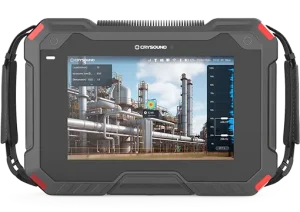
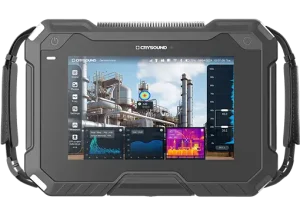
    For technicians in industrial facilities, using acoustic imaging cameras can boost safety and reduce costs. How? By quickly identifying leaks and partial discharge without “reading bubbles”. Here at CRYSOUND, we are raising the bar with our  latest innovation—the CRY8120 Series Acoustic Imaging Cameras. This cutting-edge device not only transforms industrial inspections but also sets a new standard for performance and efficiency.  Let’s check out the amazing capabilities, top-notch performance, and advanced features of the CRY8120, making it a must-have for industrial inspections.

    Unparalleled Capabilities

    The CRY8120 acoustic imaging camera excels in various applications, including gas leak detection, electrical partial discharge identification, and mechanical deterioration monitoring. It outperforms traditional methods by providing results that are 10 times faster and more accurate. When it comes to gas leak detection, the CRY8120 swiftly pinpoints leak locations, estimates leakage volume, and potential economic losses in real-time. This capability reduces detection time, enabling faster repairs and reduced downtime. For electrical partial discharge detection, the camera displays PRPD charts in real-time, accurately identifying discharge types and aiding in informed decision-making for efficient maintenance and prevention of potential failures.

    Best-in-Class Performance

    Equipped with 200 microphones, a 100 kHz bandwidth, and 10 times more computing power, the CRY8120 acoustic imaging camera offers unparalleled performance. Its ability to pinpoint even the smallest and most distant leaks with exceptional accuracy is a testament to its superior specifications. Unlike other acoustic camera solutions on the market, the CRY8120 can detect leaks up to 200m away.  Despite these advanced features, the CRY8120 remains lightweight at just 1.4 kg, making it highly portable and suitable for deployment in various challenging industrial environments.

    Enhanced Features for Convenience

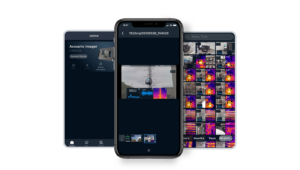
    The CRY8120 acoustic imaging camera goes beyond its primary functionalities by offering a range of convenient features that enhance the user experience. Bluetooth and Wi-Fi connectivity enable wireless data transmission and quick report export, eliminating the need for cumbersome cables and saving valuable time.

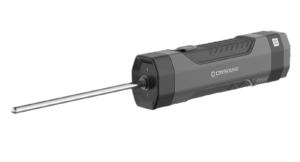
    Additionally, the integration of a thermal camera and contact sensors provides a comprehensive solution for diverse industrial scenarios, further extending the camera’s versatility and applicability.

    Premium Display for Clear Visibility

    Featuring an impressive 8-inch display with a resolution of 1920 × 1200 pixels, the CRY8120 delivers a clear and detailed view of field conditions. The high-resolution display accurately renders leaks and other issues, magnifying every detail with its 13 million pixels and 6x digital zoom. Moreover, the display’s brightness of 600 nits ensures optimal visibility even in bright sunlight, making it suitable for outdoor inspections.

    Long-Lasting Battery Life

    The CRY8120’s battery life is designed to accommodate extended inspection sessions. With a single battery, it provides up to 5 hours of continuous operation. For longer durations, an additional battery ensures uninterrupted use throughout the day. This extended battery life eliminates the need for frequent recharging, maximizing uptime and productivity.

    Conclusion

    The CRY8120 acoustic imaging camera from CRYSOUND represents a groundbreaking advancement in the field of industrial inspections. Its unmatched capabilities, enhanced features, and superior performance make it an indispensable tool for inspection teams across industries. With the CRY8120, inspections become faster, more accurate, and more efficient, ensuring the safety and reliability of industrial equipment. Embrace the next generation of acoustic imaging technology and elevate your industrial inspection capabilities with the CRY8120 Series.

    Fore more details, contact us by info@crysound.com
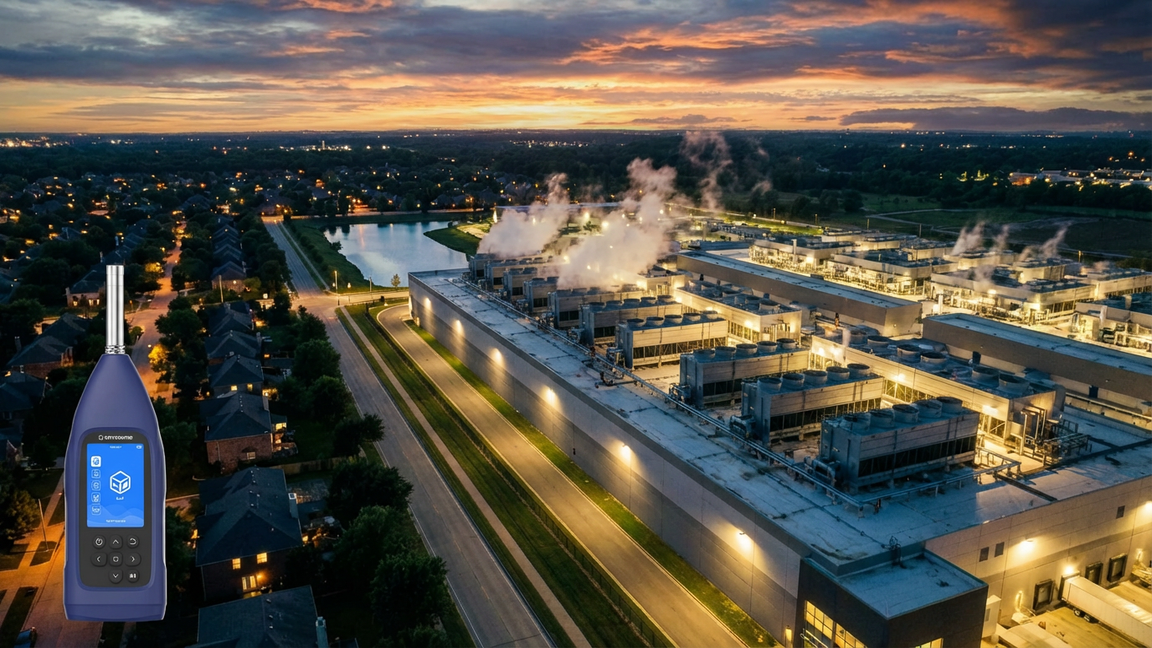
    Aerial view of a data center at dusk with nearby homes and a handheld sound level meter for 24/7 noise compliance monitoring

    Data Center Noise Compliance: How 24/7 Monitoring Helps Avoid Fines

    As AI workloads surge and hyperscale facilities continue to expand, data center noise complaints are rising rapidly. At the same time, environmental noise regulations are becoming more stringent. In Europe, more than 109 million people - about 20% of the population - are exposed to environmental noise above 55 dB(A). Driven by compliance requirements, the acoustic analysis services market is also growing quickly, with a projected CAGR of 6.4% through 2035. This is no longer just a matter of being a good neighbor. It is now a hard compliance requirement. Without continuous monitoring, operators are essentially flying blind. Figure 1. Site overview related to data center noise monitoring and property boundary compliance. Why Data Center Noise Is Becoming a Regulatory Priority Data center noise is not just annoying - it is a public health issue. The World Health Organization has noted that chronic noise exposure above 53 dB Lden is associated with significantly higher risks of hypertension, stroke, and heart attack. Regulations in multiple regions are tightening at a visible pace: Location Regulation Key Requirement Aurora, IL, USA New Data Center Ordinance (2026) 24/7 automatic noise monitoring at the property line; daytime limit of 55 dB(A), nighttime limit of 45 dB(A) Prince William County, VA, USA Noise Ordinance Update (2025) Noise limits for data centers; fines of $250-$500 per violation European Union Environmental Noise Directive Noise mapping, action plans, and a 55 dB(A) Lden threshold The trend is clear: what used to rely on self-discipline is quickly becoming a legal obligation. Figure 2. Environmental context relevant to data center noise compliance and surrounding sensitive areas. The Real Cost of Non-Compliance A fine of $250 to $500 per violation may not look serious for billion-dollar operators, but the actual cost goes far beyond the amount of the penalty itself: Project delays and permit rejection: Projects that cannot prove noise compliance at the planning stage may be rejected or delayed indefinitely. High retrofit costs: Emergency installation of acoustic enclosures after community complaints is extremely expensive, while early sound level assessment during design and operation can prevent that cost. Damage to reputation and community relations: Noise complaints erode community goodwill faster than almost any other issue. Operational restrictions: Some ordinances may force operators to reduce cooling capacity at night, directly affecting uptime and SLA commitments. Using the CRY2830 Series to Take Control Continuous noise monitoring is not only about compliance - it is about proactive control. For the demanding requirements of 24/7 outdoor monitoring in data centers, ordinary handheld instruments are not enough. The CRYSOUND CRY2830 Series sound level meters, when used with the dedicated outdoor protection kit, provide a practical high-accuracy solution for long-term compliance monitoring. Figure 3. CRY2833 and CRY2834 outdoor monitoring kit for long-term environmental noise measurement. Meets international standards for defensible reporting The foundation of compliance is reliable and legally defensible data. The CRY2833 sound level meter meets IEC 61672-1:2013 Class 1 requirements, helping ensure that reports submitted to regulators are credible, traceable, and technically sound. Outdoor protection for long-term boundary monitoring A sound level meter used at the property boundary must operate continuously in outdoor conditions. When paired with the NA41 outdoor protection kit, the system reaches IP65 protection, helping resist dust and water splashes. Its windscreen can still reduce wind noise by more than 30 dB at 10 m/s, which is especially important for capturing real equipment noise in harsh weather conditions. Figure 4. CRY2833 and CRY2834 with windscreen for outdoor data center noise monitoring. Captures low-frequency hum with octave analysis One of the most common complaints around data centers is the low-frequency hum generated by cooling equipment in the 63-250 Hz range. Standard A-weighted measurement can underestimate this problem. The CRY2830 Series supports both 1/1 octave and 1/3 octave analysis, making it easier to identify and evaluate these hidden low-frequency noise sources. Continuous logging and alarm-ready monitoring The system includes a built-in 32 GB microSD card for continuous data logging, with data automatically saved in standard CSV format. This makes it easier to build long-term compliance records and export measurement data for review. Flexible connectivity and system integration The CRY2830 Series also offers multiple interfaces, including Bluetooth, WiFi, RS232, and USB, making it easier to integrate sound level data into an existing BMS or cloud dashboard for remote access and long-term management. Figure 5. CRY2833 and CRY2834 interface options for data logging and system integration. Best Practices for Deployment Start with a baseline survey: Before installing permanent monitoring equipment, carry out a full noise survey to establish background noise levels and identify dominant noise sources. Use strategic placement with outdoor protection: Deploy the CRY2833 with the NA41 outdoor protection kit at property boundary points closest to sensitive receivers such as residential areas. Monitor low-frequency noise and use smart triggers: Enable 1/3 octave analysis to flag low-frequency issues and set threshold-based triggers for automatic recording when needed. Generate compliance-ready records: Export standard CSV measurement data regularly so that you have a defensible record available for any future noise complaint or regulatory review. Conclusion The data center industry is reaching a turning point. Regulations are tightening, and the cost of non-compliance already far exceeds the investment required for a professional sound monitoring system. 24/7 sound level monitoring is not a regulatory burden - it is an operational advantage. It gives operators better data, better decisions, stronger community relations, and written proof that they are doing the right thing. To learn more, explore the CRY2830 Series and contact CRYSOUND for a customized data center noise compliance solution.

    Get in touch

    If you are interested or have questions about our products, book a demo and we will be glad to show how it works, which solutions it can take part of and discuss how it might fit your needs and organization.

    Support Support
    Product Catalogs Product Catalogs Solutions Solutions User Manuals User Manuals Software Download Software Download Product Inquiry Product Inquiry Schedule Demo Schedule Demo Technical Support Technical Support +86-571-88225128 +86-571-88225128
    Request Quote 0
    Request Quote
    This site is registered on wpml.org as a development site. Switch to a production site key to remove this banner.